Repair decisions
Bumper Scuff or Deeper Damage? When to Bring It In
October 31, 2026 · 5 min read
A contrasting mark on a bumper may be paint transfer or a shallow scuff, but the bumper’s fit tells you more about whether the conversation should move beyond the finish. If it still sits flush and there are no other changes, start with clear photos. If there is a crack, loose edge, panel gap, damaged light or trim, warning message, fluid concern, or a changed vehicle feature after the impact, have it assessed in person promptly.
A surface mark can wait for photos; a fit problem should not
A bumper scrape can look like a paint problem until the cover sits a little proud near a headlight or the corner starts to pull away. If the bumper is scraped but still sits flush, a few daylight photos are a reasonable first step. If there is a new gap near a light, loose trim, a crack, or a warning light on the dash, bring the vehicle in rather than trying to decide from the mark alone.
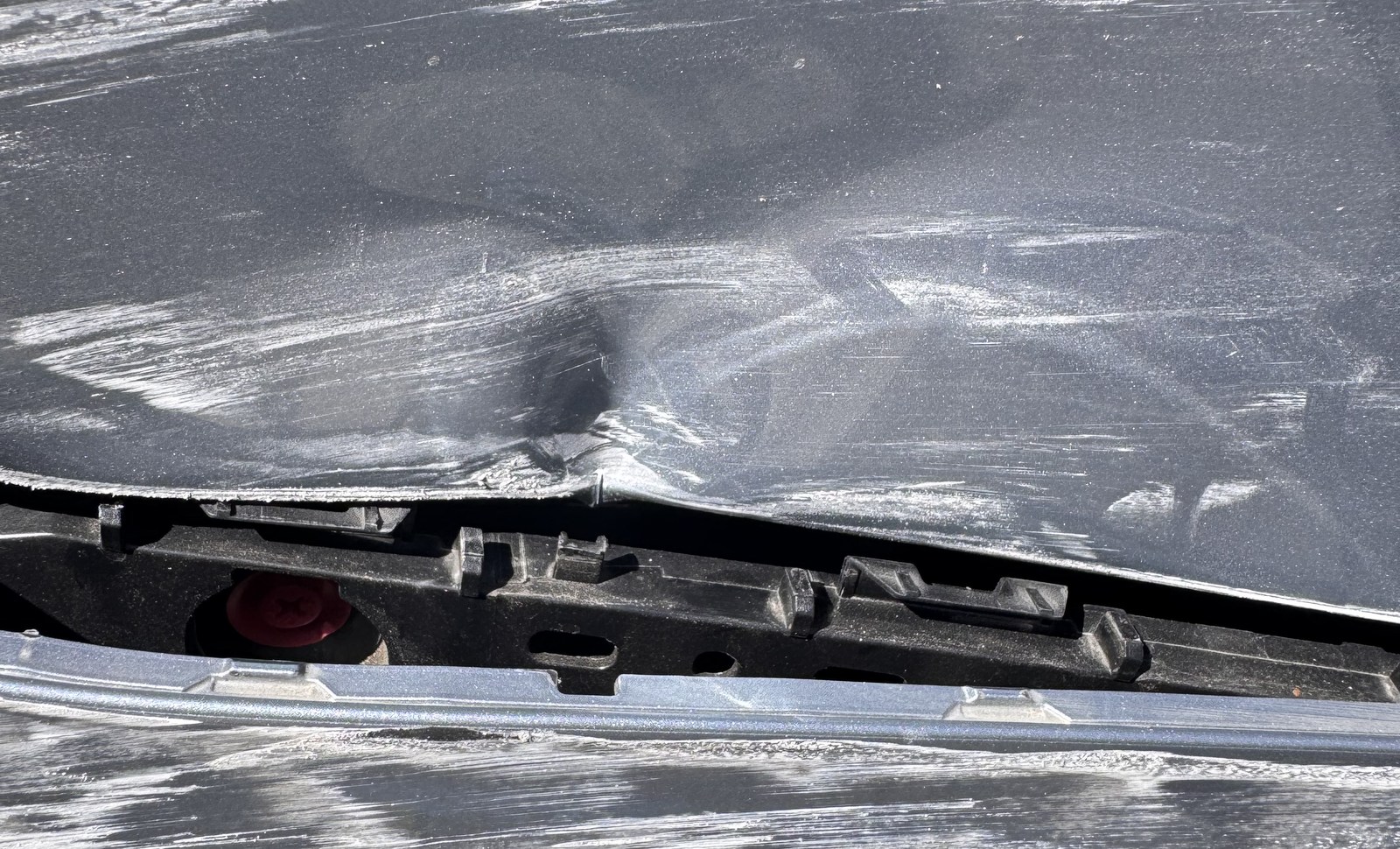
A contrasting smear may be material transferred from another vehicle, cart, post, or object. A shallow scuff can look similar. Check for color sitting on the surface, a gouge, chipped finish, a rough patch, a crack, or an area that looks deformed. Missing finish may expose the plastic or another underlying layer, depending on the bumper section and coating.
Take photos before you rub at it. Household cleaners, rough pads, and aggressive compounds can change the finish and make the original condition harder to read. A clear photo helps us see the visible concern; it cannot reliably tell us from home whether the issue is only transfer, damaged paint, or something underneath.
Look closely where the bumper meets the car
The edge of the bumper cover is often more useful than the scuff itself. Look where it meets the fender, grille, headlamp or taillamp, and nearby trim. A newly visible gap, displaced edge, loose corner, or piece that no longer lines up is a reason for a closer inspection.
Those signs do not automatically mean a broken mount or hidden structural damage. They do mean the visible scrape is no longer the whole question. The California Bureau of Automotive Repair notes that much collision repair work is hidden by vehicle panels, so the outer cover does not show every component behind it. Do not push, pull, drill, or force a loose cover back into place in the driveway.
If the cover is hanging, rubbing a tire, blocking a lamp, leaking fluid, or paired with a change in steering or braking feel, avoid unnecessary driving and get professional guidance promptly. A webpage cannot determine whether a vehicle is roadworthy from a description or photo.
A warning light or changed parking feature changes the scope
If a warning light or error message appeared after the impact, photograph the dash when it is safe and include it with your estimate request. Do the same if a parking aid, camera, or driver-assistance feature behaves differently. The symptom does not identify the failed part, but it tells us to look beyond the paint mark.
On some vehicles, cameras, sensors, radar, and related wiring sit near bumper areas. IIHS explains that crash damage and repairs can make camera or sensor calibration necessary, and manufacturers may require calibration when a sensor is removed, replaced, or reinstalled. The correct procedure depends on the vehicle, the damage, and the repair—not simply on how minor the scrape appears.
Bring the right information to the first conversation
For a first conversation with Bravada, send one wide photo of the bumper or vehicle corner, one close photo of the mark, and one photo showing the nearby light, trim, or panel fit. Include the year, make, and model, plus a short account of what happened: whether the vehicle was parked, backing up, turning, or moving. Mention any new noise, loose part, rubbing, warning message, or operating change.
At Bravada, we focus on small-to-medium collision repair. In person, we will look at the bumper surface, the surrounding paint, the fit around adjoining panels and lights, and the visible impact area. We will explain what looks like a paint or refinishing conversation, what needs further confirmation, and whether repair, refinishing, replacement, or another step makes sense for the condition we can inspect.
Choose cash or an insurance claim after you understand the scope
For a small, clearly understood bumper repair, paying cash may make sense if you have the written scope, understand your deductible and any policy notice requirements, and are comfortable that additional work can appear after inspection. When the impact is meaningful, the scope is uncertain, another party is involved, or a covered benefit may matter, it is usually sensible to speak with your insurer while you get a current repair scope.
In California, you may choose the body shop for covered auto-body damage. Bravada can inspect the vehicle, explain the repair information, and discuss the part options available for the repair. Coverage, payment, and policy questions remain the insurer's decision, and no shop can predict whether a claim will affect your premium.
If replacement becomes part of the discussion, the right bumper or component choice depends on the vehicle, approved scope, availability, fit, condition, and refinishing needs. OEM, CAPA-certified alternative, and recycled OEM parts may each be options in the right repair. We can explain the tradeoffs and advocate for the repair plan that fits the vehicle and approved scope; we will not promise a part type before those details are known.
Ask what changed if the estimate changes
A photo or visual estimate is a starting point. Closer inspection, and sometimes teardown, can reveal related work the outside of the bumper did not show. If the scope changes, ask what was found, how it changes the repair, and what approval is needed before additional work begins.
California repair rules require an estimate and customer authorization before repairs start, and the shop must obtain authorization for additional repairs discovered after work begins. If the bumper has a crack, a loose or hanging cover, a new fit problem, damaged lamp or trim, tire rubbing, a fluid concern, a warning or error message, or a changed vehicle feature, schedule an in-person assessment rather than relying on photos alone.