
Paint & protection
Water Spots, Mineral Residue, and Paint Etching: When Washing Is Not Enough
September 14, 2026 · 5 min read
You wash the car, take a step back, and the rings are still there. Dried water can leave mineral residue on the finish. Some marks sit on the surface; others affect the clarity underneath.
Dried water leaves minerals behind.
Yorba Linda Water District says its supply comes from multiple sources and mineral content can vary. It describes water with 13 grains per gallon or more as hard; its imported water averages 18 grains and its well water averages 20 grains.
On a vehicle, dried deposits can show up as spots, rings, or a hazy area that routine washing does not clear.
Notice what left the marks.
A sprinkler pattern, a drip line under a mirror, or rings left after a wash can give the shop useful context. You do not need to identify the exact mineral or decide whether the finish is etched. A photo in direct light, plus a note about when the marks appeared, is enough to start.
If the spots are fresh, gentle washing and careful drying are sensible. If they remain after normal care, stop chasing them with stronger products and let the paint condition guide the next step.
Residue and etching call for different work.
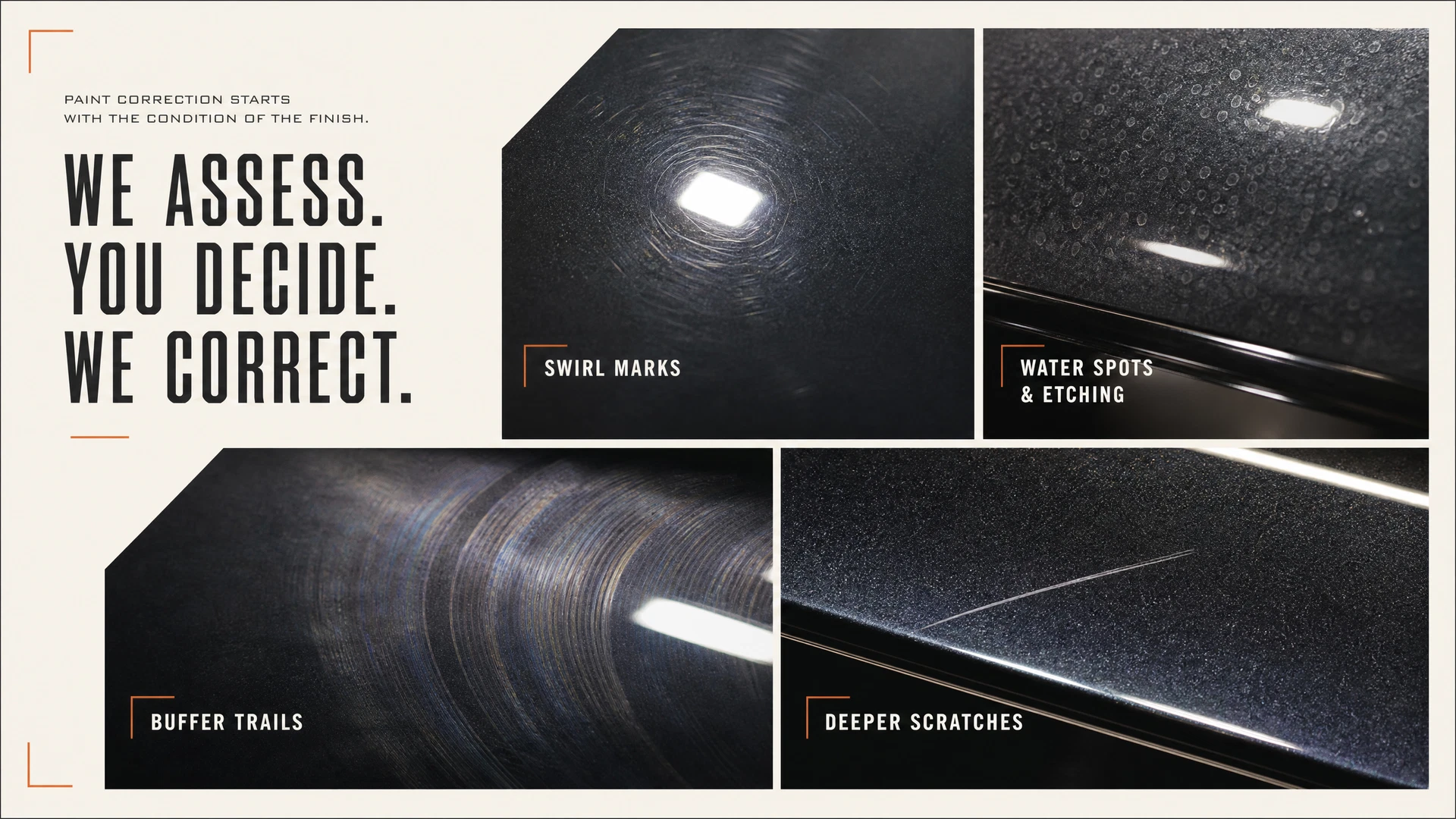
Some spots sit on the surface. Others appear to affect the clarity of the finish underneath. Paint correction can address water spotting, etching, swirls, buffer trails, and some visible scratches after the paint is assessed.
Bravada looks at the vehicle in person before recommending correction. Some defects remain visible even after careful work.
Keep fresh spots from becoming a bigger project.
If water dries on the vehicle, do not keep rubbing one area until it changes. A gentle wash and careful drying are safer than an aggressive spot treatment when you do not yet know whether the mark is residue or a paint defect.
Ceramic coating can make washing and drying easier, but it does not make a finish water-spot proof. If marks remain after normal care, let the paint condition guide the next step.
Do not turn a small concern into a bigger one.
Avoid harsh abrasives and improvised chemical treatments. A product that seems to improve one spot can create a bigger issue in the surrounding clear coat.
Take photos in natural light, include the whole panel and a close view, and note how long the mark has been there. If protection is being considered, assess the paint condition first.