
Paint & protection
Does Peelclear Help With Rock Chips? A Practical Front-End Protection Guide
October 31, 2026 · 5 min read
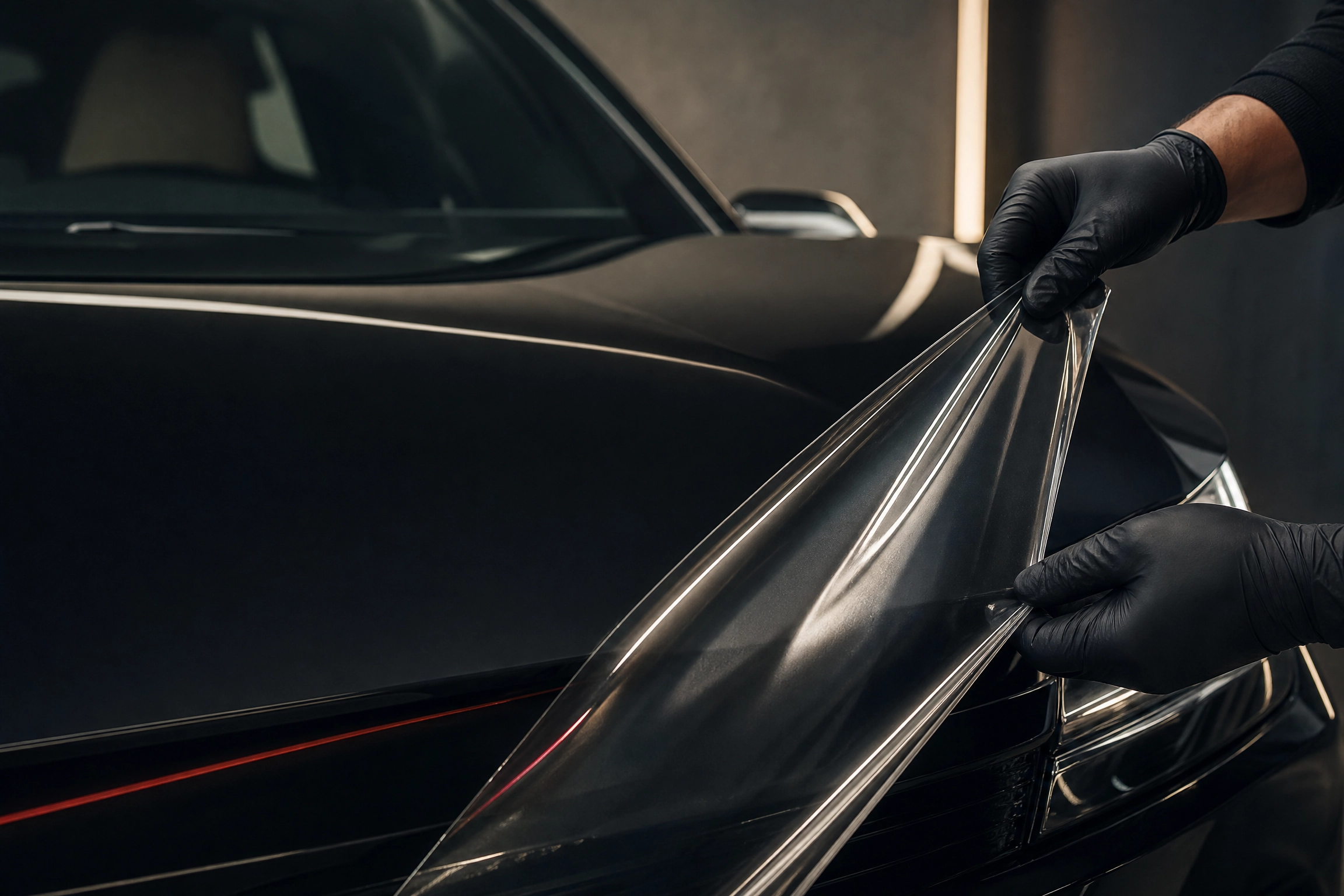
Yes—Peelclear, a spray-applied peelable paint protection system, can help reduce routine rock-chip and road-debris wear on the panels it covers. It is a sensible option to compare when the concern is ordinary freeway wear on a painted front end, not a guarantee against every stone strike. Peelclear says its clear protective layer can absorb minor impacts and abrasion while reducing chipping compared with unprotected paint, and it also states that it will not stop a direct rock strike. Before choosing it, compare the proposed coverage, the condition of the paint underneath, and traditional paint protection film (PPF) for the areas taking the hardest hits.
For routine road debris, Peelclear can help. For every direct hit, it cannot.
If the front bumper has started to show tiny marks after regular freeway driving, Peelclear can be a reasonable protection conversation. Peelclear’s clear-protection guidance describes a flexible, crosslinked layer designed to absorb minor impacts and abrasion and reduce chipping and surface marring compared with unprotected paint. That is a manufacturer claim, not a promise about what will happen on one particular drive.
A sharp or direct stone strike can still chip paint. Peelclear says so, and its limited warranty excludes rock chips, road debris, impact damage, abrasion, and scratches from external objects. For a driver who wants to reduce normal road-debris wear on selected panels, it is worth comparing. For someone expecting any protective service to make a front end chip-proof, that expectation needs to change before the work is planned.
Start with the panels that are actually collecting chips
Look at the pattern of wear before selecting a package. Peelclear’s current targeted clear-protection package names the front bumper, leading edge of the hood, and front fenders. Those are sensible starting points when the chips are building in those places, especially after frequent freeway miles or driving through construction areas.
Mirrors, headlights, rocker panels, lower doors, and the area ahead of the rear wheels can take wear too, but not on every vehicle. They should be checked against the marks you can see, not added by default. Ask for each covered panel and the coverage boundaries to be named in the quote; a package title alone does not tell you where the protection begins and ends.
Compare Peelclear with traditional PPF for the high-impact area
Traditional paint protection film, or PPF, is an adhesive film applied to selected panels or across a vehicle. Peelclear is a spray-applied, peelable paint protection system. They address a similar concern, but they are different services and should not be treated as interchangeable products.
My practical recommendation is to compare both if the painted front end is your main concern. Traditional PPF is a strong physical-protection option for exposed panels, with the tradeoff that complex shapes can involve visible coverage boundaries or relief cuts and film edges may need attention over time. Peelclear is worth discussing when you want clear protection, a color or finish change, or an option for a sharply styled bumper where film edges are a concern. The right choice depends on the panels, the finish you want, the visible edges you will accept, and the selected product’s current documentation—not the name on the package.
Existing chips and repair history matter before anything goes over the paint
Peelclear is designed to be removable from a suitable, properly prepared surface when it is removed according to Peelclear procedures. The manufacturer defines a suitable underlying surface as OEM or properly refinished paint that is structurally sound, fully cured, stable, properly adhered, and free of known peeling, delamination, corrosion, oxidation, or other instability.
That makes old rock chips, lifting clear coat, a repaired quarter panel, a repaint, or an unknown paint history part of the first conversation. Peelclear’s warranty says results can vary with paint condition, repair history, preparation, maintenance, and removal procedures. It does not guarantee damage-free removal from every substrate, particularly a surface that is unstable or has been repaired before.
Get the protection scope in writing before you compare prices
A useful proposal identifies the covered panels, the clear or finish option, planned preparation, existing paint-condition notes, coverage boundaries, exclusions, aftercare, and anything found during inspection that could change the work. That gives you a real way to compare a targeted front-end project with broader coverage instead of comparing two very different scopes as if they were the same service.
If warranty eligibility matters to you, request the current written terms with the proposal. Peelclear’s full warranty sets eligibility conditions and exclusions, and its full terms control over a sales summary. California’s Bureau of Automotive Repair also advises consumers to get a specific description of work and authorize changes in a repair transaction. A protection application is its own service, but the same habit—reviewing a clear written scope before work starts—is useful here.
Use the consultation to match the protection to the car and the roads you drive
Ceramic coating belongs in a separate part of the decision. After proper preparation, it can support gloss, water behavior, and routine wash care; it does not provide the same physical layer for a rock strike. If chip reduction is the priority, compare Peelclear and traditional PPF first, then discuss whether a compatible coating and care plan make sense for the selected system.
Bring the vehicle in with photos of the chips, and point out any repainted or repaired panels. At Bravada, we will look at the visible paint condition and the places collecting wear, identify what still needs confirmation, then talk through Peelclear and traditional PPF in plain language—including coverage boundaries, preparation, and the tradeoffs for your vehicle. You will leave with a written protection scope that fits the condition of the car and the wear you are trying to reduce.