After an accident
What to Do After a Minor Car Accident in Yorba Linda
September 14, 2026 · 5 min read
A drivable car and a damaged bumper can still leave you second-guessing every next move. Get safe, make a short record of what happened, and let the shop sort out the repair questions.
Safety comes first.
If anyone is injured, call 911. If it is safe to do so, move out of traffic and avoid arguing about fault at the scene. The California Department of Insurance recommends keeping the conversation to the information you need, then reporting the claim promptly when a claim is involved.
The repair decision can wait. Get to a safe place, then look at the vehicle with a clearer head.
Record the scene while it is fresh.
Exchange names, phone numbers, license plate numbers, driver-license information, and insurance information with the other driver. Photograph the vehicles, visible damage, and scene if you can do so safely. Keep any claim number and adjuster contact information with those photos.
Those details give your insurer and repair shop a usable starting point. They also save you from rebuilding the story days later.
Start with a wide photo, then move closer.
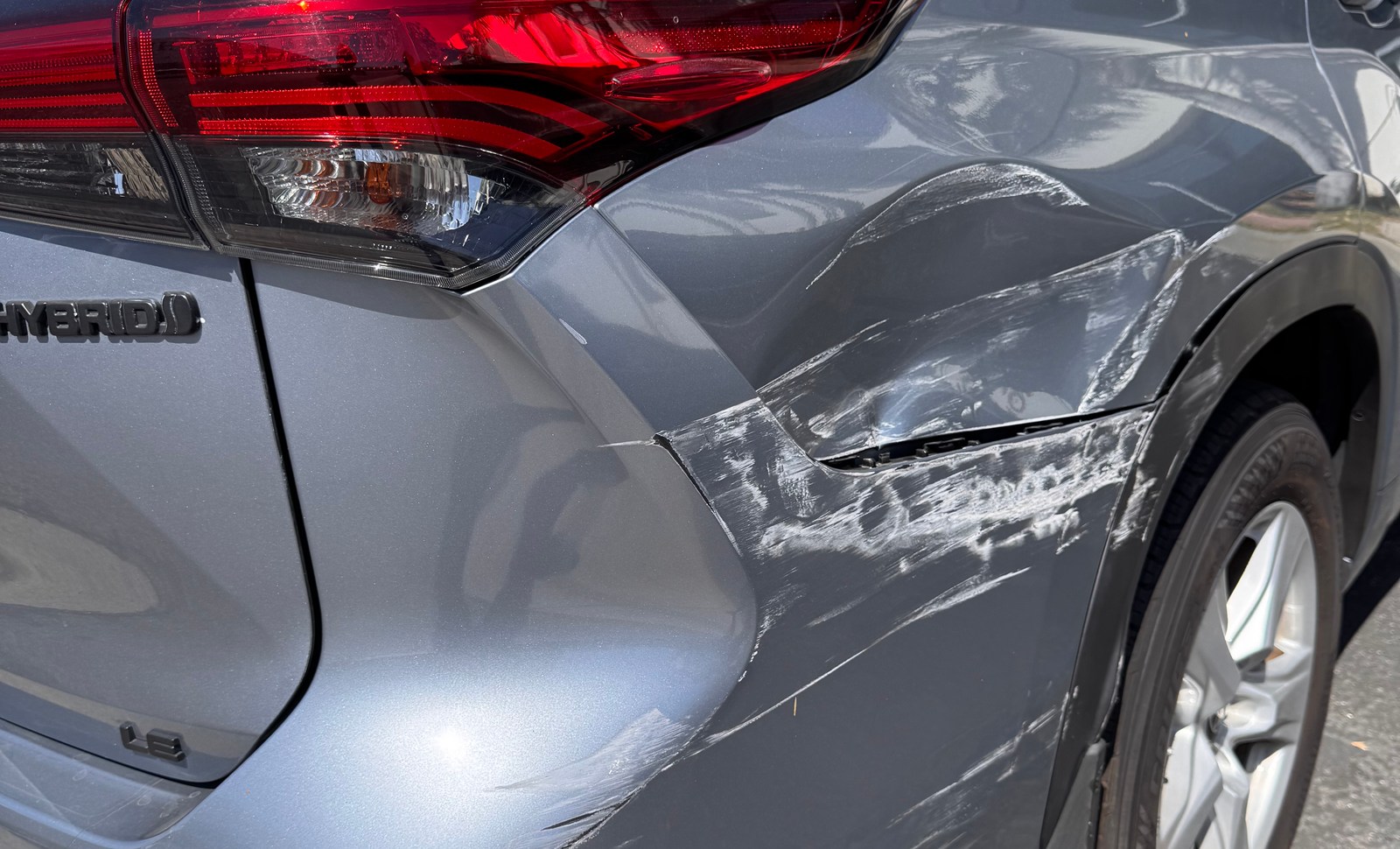
For a repair conversation, take one photo that shows the whole side or end of the vehicle before taking close-ups. Then photograph the damage, nearby panels, trim, lights, wheel area, and anything that looks out of place.
You do not need polished photos. A clear set taken in good light gives the shop more context than one close view of a scrape.
The next day can tell you a little more.
After the rush of the scene, look for anything that feels different when you return to the car. A warning light, loose trim, a new gap around a bumper, a light that no longer sits right, or an unusual sound is worth including in the repair conversation.
That does not tell you what the repair is. It simply gives the estimator a better starting point. You are not expected to diagnose the vehicle in a parking lot.
The claim does not choose the shop.
California drivers may choose the auto body repair shop for covered collision damage. An insurer may recommend a shop, but cannot require you to use one. Your insurer still decides coverage and authorization under your policy.
Bring Bravada the vehicle details, visible damage, photos if you have them, and any claim information already available. Bravada works with all major insurers and can help keep the repair side organized.
The first estimate covers what is visible.
An initial estimate reflects the damage that can be seen. Inspection can reveal related damage, and some repair needs do not become clear until parts come off. If the scope changes, Bravada will explain what was found before moving forward.
Bravada specializes in small-to-medium collision repair, including bumpers, dents, damaged panels, paint damage, refinishing, and color-match work. An in-person inspection confirms the visible repair needs for your vehicle.
Cash repairs need the same close look.
If you are paying out of pocket, share the vehicle year, make, model, visible damage, and photos if they are handy. Bravada can discuss the work you want priced, then confirm the repair needs in person before work is scheduled.
The decision to use insurance or pay cash depends on your policy, the damage, and your priorities. Bravada can explain the repair work. Your insurer can answer policy and coverage questions.